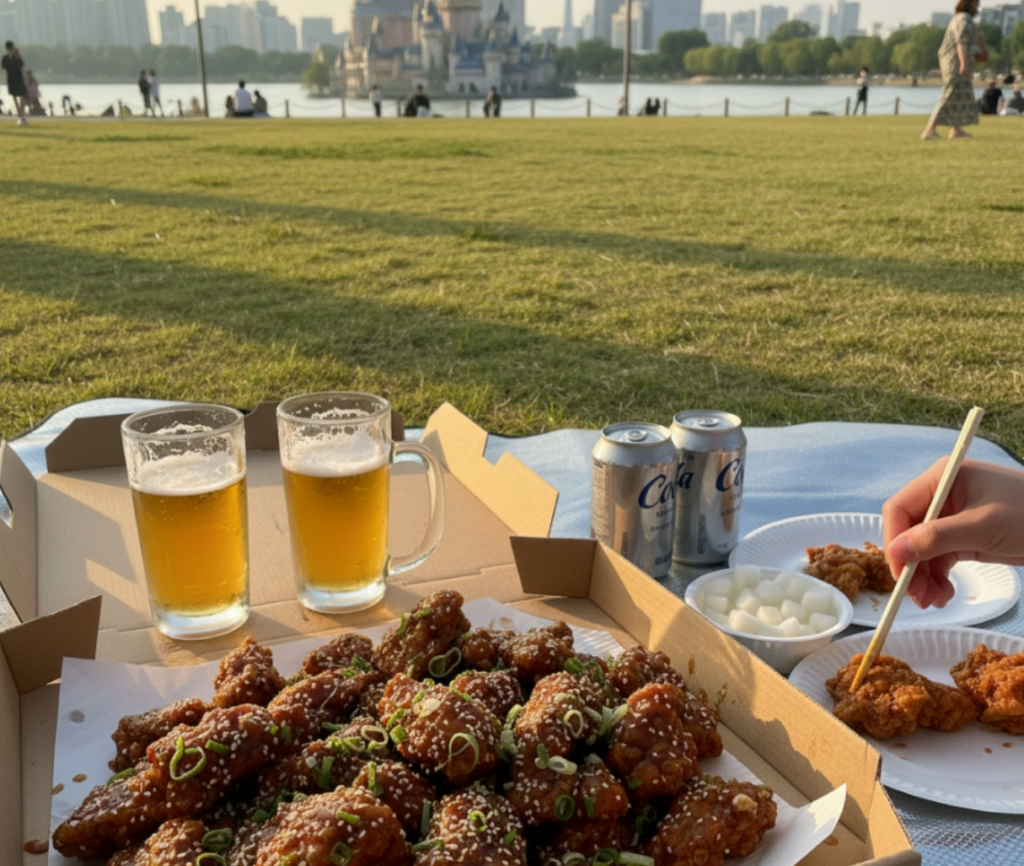
It’s 1 a.m. You’re sitting on a blanket by the
Han River. The city lights are reflecting off
the water. You’re hungry.
So you open an app, order fried chicken and
beer — and 30 minutes later, a delivery rider
shows up at the riverbank and hands you your food.
This is not a fantasy. This is just Tuesday
in Korea.
A Country Built for Delivery
Korea’s delivery culture didn’t happen by accident.
Think about the geography. Korea is a small,
densely populated country with over 51 million
people packed into a relatively compact space.
Cities are dense. Restaurants are everywhere.
Customers are everywhere too.
The infrastructure for delivery was always there.
Technology just made it unstoppable.
Today, according to Statistics Korea, the average
Korean orders food delivery 8.3 times per month —
nearly double the 4.2 times recorded in 2020.
In Seoul and the metropolitan area, 35% of
restaurants offer 24-hour delivery.
The market itself is forecast to reach 27-28
trillion won (approximately $19-20 billion USD)
in 2024 alone.
That’s not a delivery industry.
That’s a delivery economy.
The Big Two: Baemin and Coupang Eats
Two giant platforms dominate Korea’s delivery world.
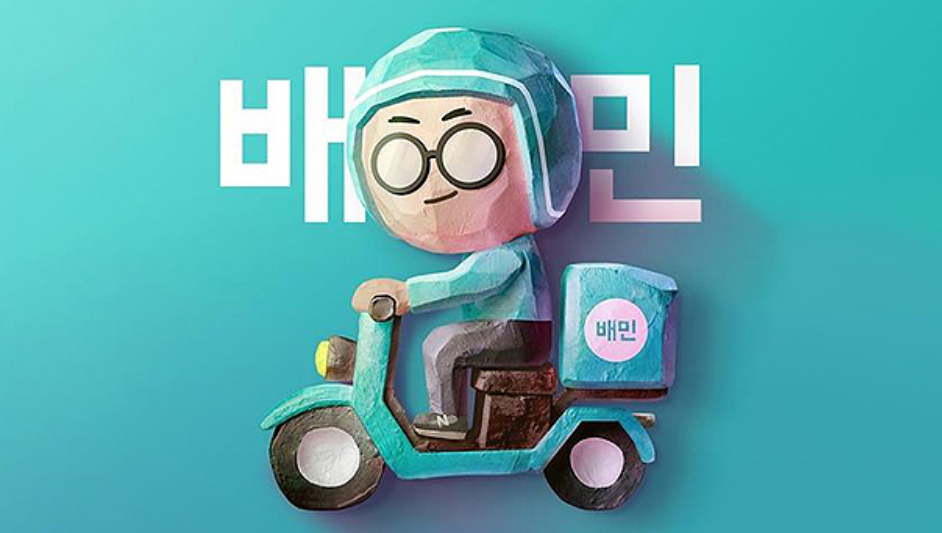
Baemin (배달의민족, which literally translates to
“the People of Delivery Nation”) controls 61%
of the market as of 2024, with over 21 million
active users. In a country of 51 million people,
that means almost half the entire population
has this app on their phone.
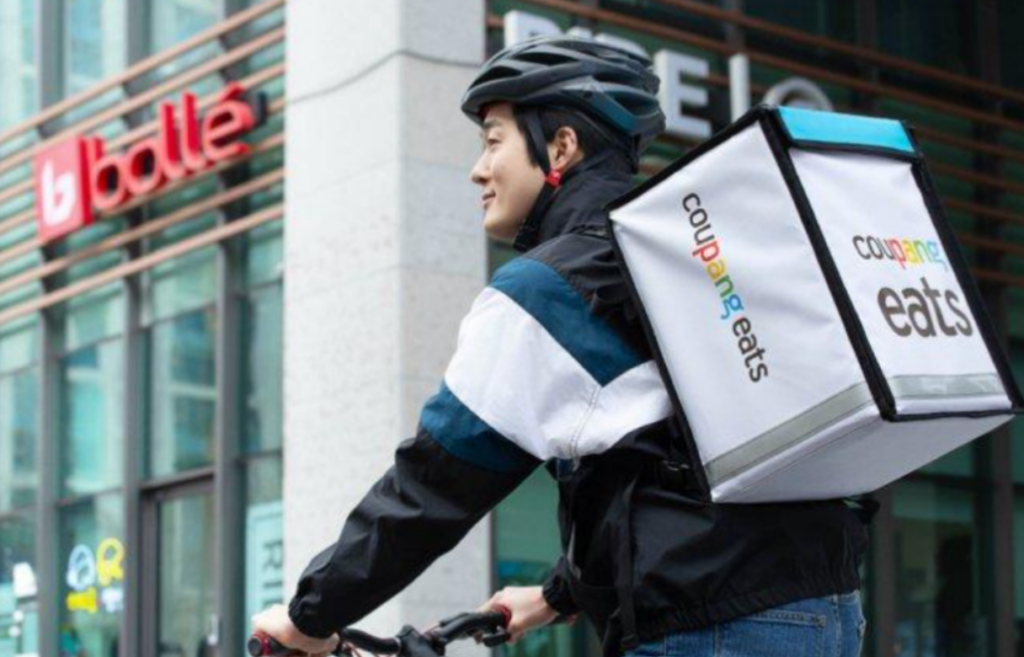
Coupang Eats, operated by Korea’s answer to
Amazon, has been aggressively chasing Baemin
with free delivery offers and is now firmly
in second place.
These two platforms have made food delivery
so frictionless that ordering dinner feels as
natural as breathing.
Anyone Can Be a Delivery Rider
Here’s something that makes Korea’s delivery
culture truly unique.
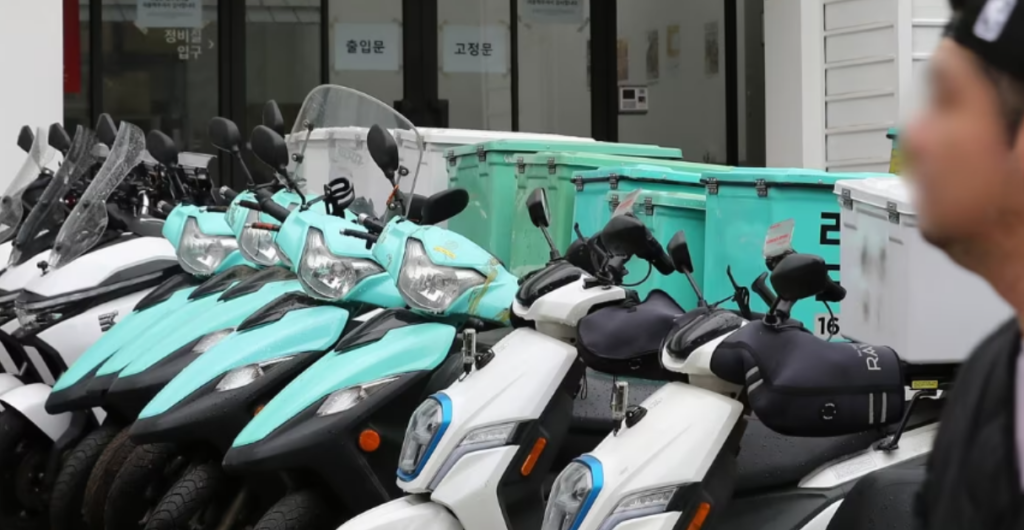
Both Baemin and Coupang Eats have built flexible
delivery systems where literally anyone can sign
up and start delivering — no contract, no fixed
schedule, just pick up orders when you want.
The result? Korea’s delivery workforce looks
like nothing else in the world.
You’ll find young people in their 20s doing a
few deliveries on a Saturday afternoon, then
using the money to fund their dinner date that
evening. You’ll find middle-aged people who lost
their small business and turned to delivery to
get back on their feet. You’ll even find elderly
people walking deliveries through their
neighborhood — getting paid while getting exercise.
With Korea’s youth unemployment rising and the
minimum wage increasing each year, many small
business owners can’t afford full-time staff
anymore. Delivery work fills that gap.
Some riders do it casually. Others go full-time
and — if they’re fast and strategic about
which orders they take — can earn more than
the average office worker.
The Dark Side: Who Really Wins?
Here’s the uncomfortable truth.
The real winners in Korea’s delivery boom are
not the restaurants. They’re not even the riders.
They’re the platforms.
Restaurants using Baemin’s premium plans pay
a 6.8% commission per order plus additional
delivery fees. Coupang Eats charges 9.8%
commission. Yogiyo demands up to 12.5%.
For small restaurants operating on thin margins,
these fees can be devastating. Some restaurant
owners report selling more food than ever —
and making less money than ever.
But here’s the trap: if you don’t join these
platforms, your delivery business essentially
doesn’t exist. Customers won’t find you.
It’s a system where restaurants feel they have
no choice but to participate — even when
participation hurts them.
A civic group survey found that 86.7% of users
found Baemin’s delivery fees too expensive.
Meanwhile, food prices on delivery apps tend
to be higher than in-restaurant prices,
as businesses quietly pass the platform
costs on to consumers.
Everyone pays. The platform profits.
The Scale Is Almost Absurd
Korea now uses an average of 18 million
delivery containers every single day.
Think about that for a moment.
18 million containers. Every day.
The environmental cost of this convenience
is real. Since 2024, restaurants are no longer
allowed to automatically include disposable
utensils — customers must opt in. Electric
motorcycles among delivery riders are slowly
increasing. But the scale of the challenge
is enormous.
Korean Uncle’s Take
I’ve ordered delivery to a park.
I’ve ordered it to a friend’s rooftop.
I won’t say whether I’ve ever ordered it to
a Han River picnic blanket —
but I’m not denying it either. 😄
Korea’s delivery culture is genuinely impressive.
The convenience is real. The speed is real.
The variety is real.
But so is the inequality built into the system.
The platforms grow richer. The restaurant owners
struggle. The riders hustle. The consumers
enjoy the convenience without thinking too much
about the cost.
It’s a brilliant system if you’re at the top.
For everyone else, it’s complicated.
Still — at 1 a.m., when you’re hungry by the
Han River and a delivery rider appears out of
the darkness with your fried chicken?
You’re not thinking about any of that.
See you in the next post,
Korean Uncle 🇰🇷