Golf in Korea is not what most foreigners expect.
There are no wide open fairways where you
casually walk your bag to the next hole.
No lone ranger playing a quiet round by himself
on a Sunday morning.
Korean golf is organized, social, surprisingly
expensive — and utterly fascinating.
Let me show you what I mean.
A Sport That Used to Belong to the Rich
Golf arrived in Korea in the early 1900s,
introduced by British missionaries. But through
Japanese colonial rule and the devastation of the
Korean War in 1950, the sport never really took root.
It wasn’t until the 1970s that golf began to
properly establish itself in Korea — and even
then, it was strictly an upper-class sport.
Korea is a small, mountainous country. Land is
scarce. Building a golf course requires
flattening hills, clearing forests, and spending
enormous amounts of money. That cost was passed
on to the players.
Expensive equipment. Expensive green fees.
Golf was a status symbol — something you did
to signal you had made it.
Then COVID-19 changed everything.
From 2019 onwards, with international travel
shut down and nowhere to go, Koreans turned
to golf. Young people picked it up.
Middle-aged workers rediscovered it.
Golf wear brands exploded. New courses opened.
Golf went from a rich man’s game to
a mainstream lifestyle sport — almost overnight.
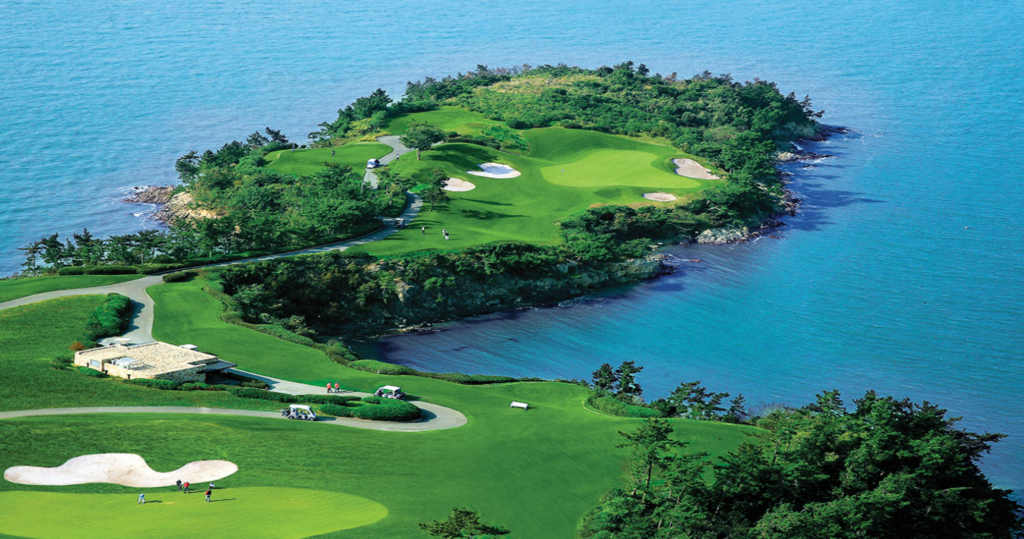
Screen Golf: Korea’s Greatest Invention (No, Really)
Here’s where Korea gets genuinely creative.
Land is scarce. Real courses are expensive.
So Korea did what Korea does best —
it used technology to solve the problem.
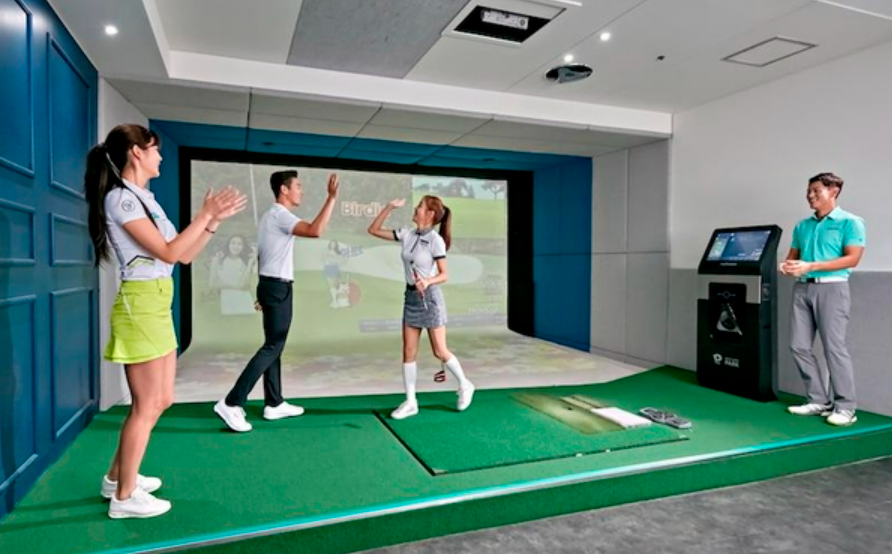
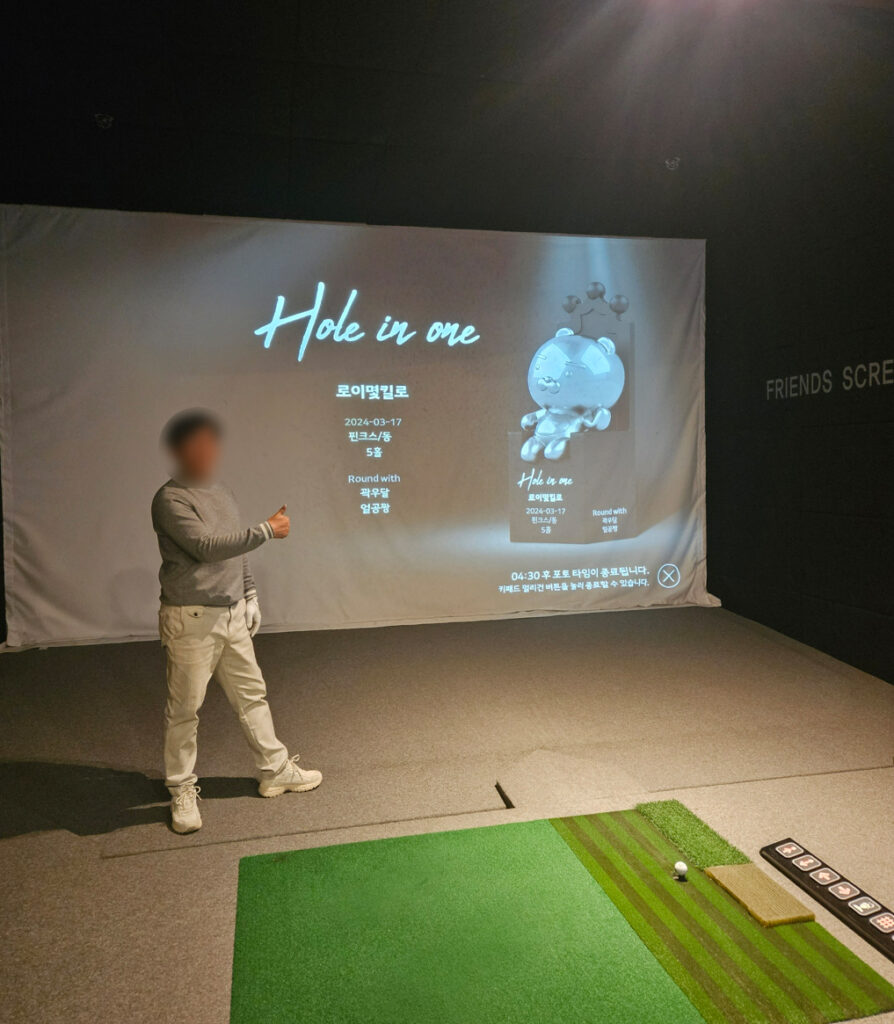
Enter screen golf (스크린골프):
a small, private room where you hit real golf
balls at a massive screen that simulates
any course in the world. The technology reads
your ball’s spin, trajectory, and speed
with near-perfect accuracy.
And this isn’t a novelty. It’s a billion-dollar industry.
The screen golf market in Korea is worth
approximately $1.6 billion, with over 8,700
simulator venues across the country.
One company dominates it all: Golfzon.
Golfzon controls roughly 60% of the Korean
screen golf market and posted revenues of
approximately 685 billion Korean won
(around $500 million USD) in 2023.
It now operates more than 13,000 venues
globally and recorded around 100 million
rounds played in 2024 alone.
Think about that. 100 million rounds.
In simulator rooms.
A typical session costs around 20,000~22,000
won per person (about $15) for a full 18 holes.
You can go after work, bring friends, order
food and drinks, and finish a round in
under two hours.
It’s golf — democratized, urbanized, and
very, very Korean.
TGL: America Finally Noticed
Interestingly, the West is now catching up.
In January 2025, Tiger Woods and Rory McIlroy
launched TGL (Tomorrow’s Golf League) — a
tech-infused indoor golf league featuring
top PGA Tour players, played at a purpose-built
250,000 square foot arena in Florida with a
massive 64×53-foot screen.
Six teams of four PGA Tour players compete
over 15-hole matches, broadcast live on ESPN.
Impressive? Absolutely.
But here’s the thing — Koreans have been
doing this casually, in small rooms, for
₩20,000 a person, for over 20 years.
TGL is a spectator sport for professionals.
Korean screen golf is something anyone can
do on a Tuesday night after work.
That’s the difference.
Real Golf in Korea: What Makes It Unique
When I do venture out to an actual golf course,
the differences from Western golf culture
are immediately obvious.
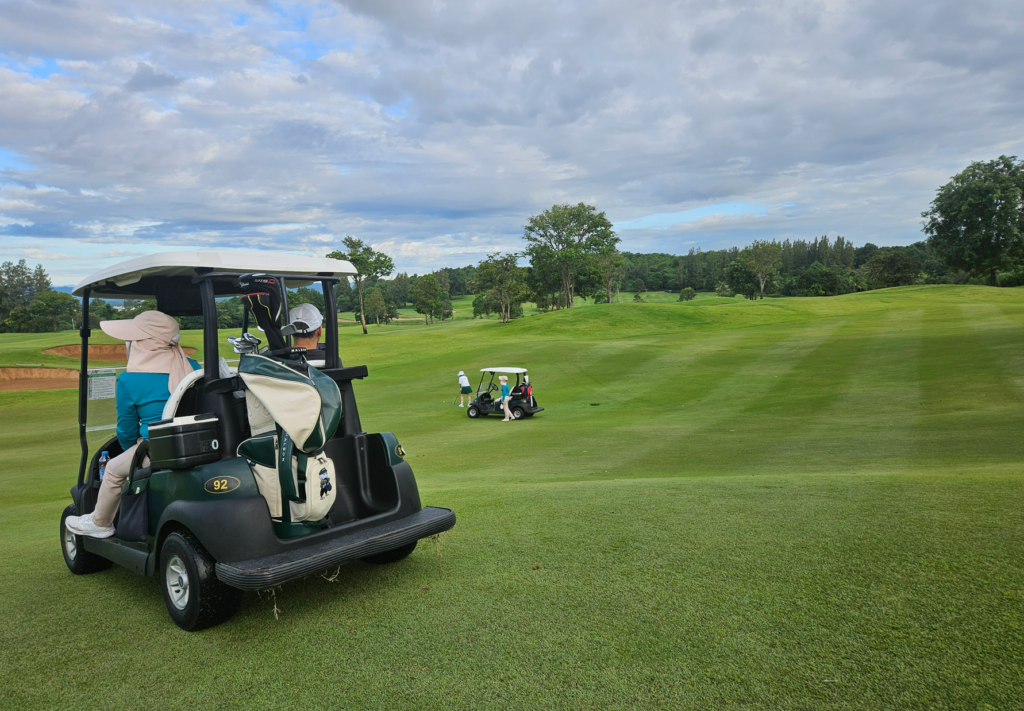
1. Electric Carts Are Mandatory
In most Western countries, golfers walk
the course or choose their own transport.
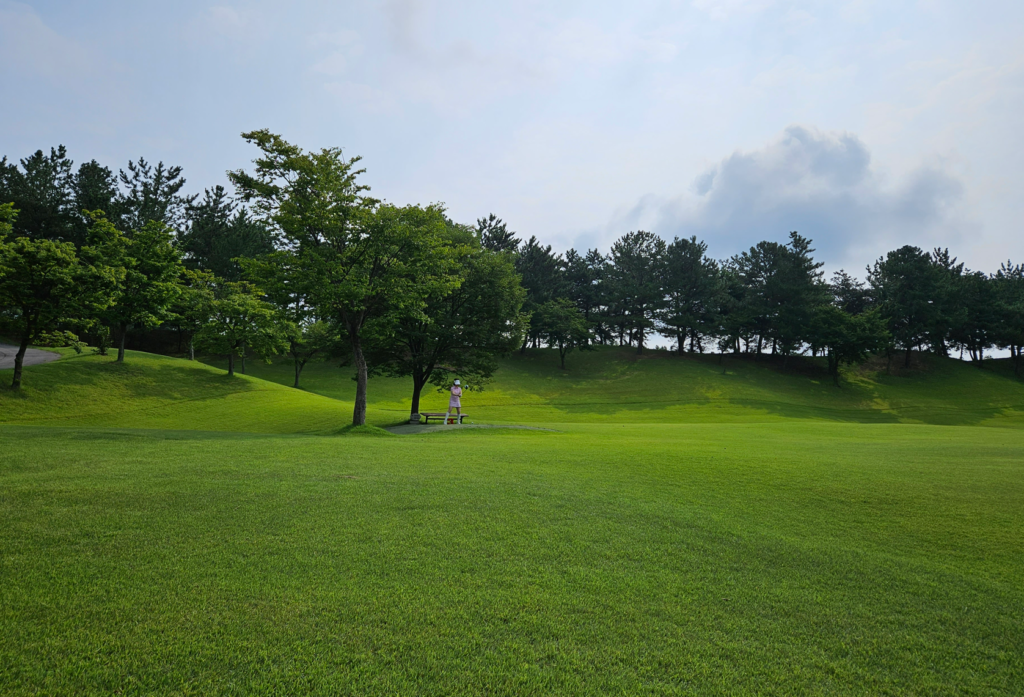
In Korea, electric carts are practically
mandatory — and they stay on designated
cart paths only.
You cannot drive onto the fairway.
The cart stays on the road beside the hole
while you walk to your ball.
(As far as I know, Yeongam Country Club
in Jeolla Province is one of the very few
exceptions where carts can access the fairway —
but that’s extremely rare.)
2. Caddies Are (Almost) Required
In most countries, caddies are optional
or reserved for professionals. In Korea,
one caddie per team of four is essentially
mandatory at most courses.
One caddie. Four players.
She reads greens, tracks balls,
manages the cart, and keeps the pace.
No-caddie golf courses are slowly appearing,
but they’re still the exception, not the rule.
3. It’s Expensive
Let me be honest about the costs.
A typical round in Korea looks like this:
Green fee: 150,000~200,000 won per person
Cart fee: 100,000 won per team
(25,000 won per person)
Caddie fee: 150,000 won per team
(about 40,000 won per person)
Add lunch, drinks, and incidentals — and
you’re looking at a minimum of 200,000 won
per person (approximately $145 USD)
for a single round.
That’s why Korean golfers frequently travel
to Southeast Asia or Japan for golf tours.
Even with round-trip flights, playing in
Thailand, Vietnam, or Japan often costs
the same — or less — than a single round
at home. And you get a vacation too.
Korean Uncle’s Take
I love golf. I play screen golf regularly
and get out to a real course when I can.
Screen golf is genuinely impressive —
the technology has gotten so good that
the simulator reads ball spin and trajectory
with near-real-world accuracy.
It’s not just practice. It’s actual fun.
But real golf? In Korea, it’s still a luxury.
₩200,000 for one round. Mandatory caddies.
Cart paths only. A tee time system that
can feel like buying concert tickets.
Still — standing on a Korean hillside course
in the early morning, surrounded by mountains,
watching the mist rise off the fairway?
Worth every won.

See you in the next post,
Korean Uncle 🇰🇷